22. July 2026
5 Minutes

The spread between winners and losers is underestimated

At this year's second-pillar trade fair at Messe Zürich, we ran a quiz with our booth visitors. We asked them the following three questions:

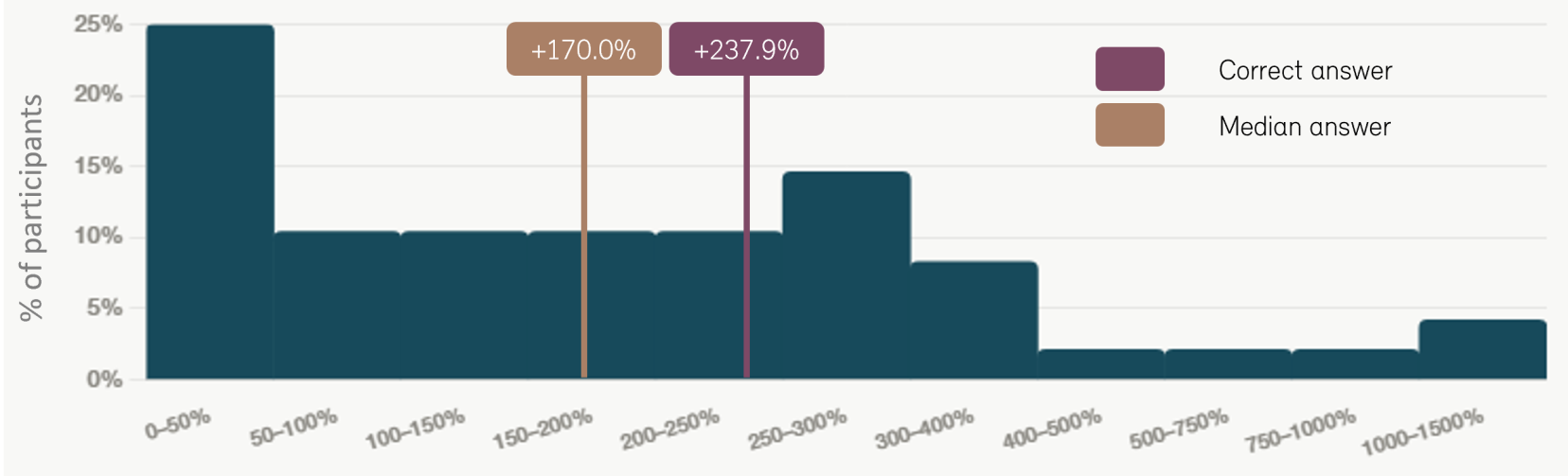
  • What annualized return would a strategy have achieved that invested each year in the 5 best-performing Swiss stocks? (Period 01.01.2023 – 31.12.2025)

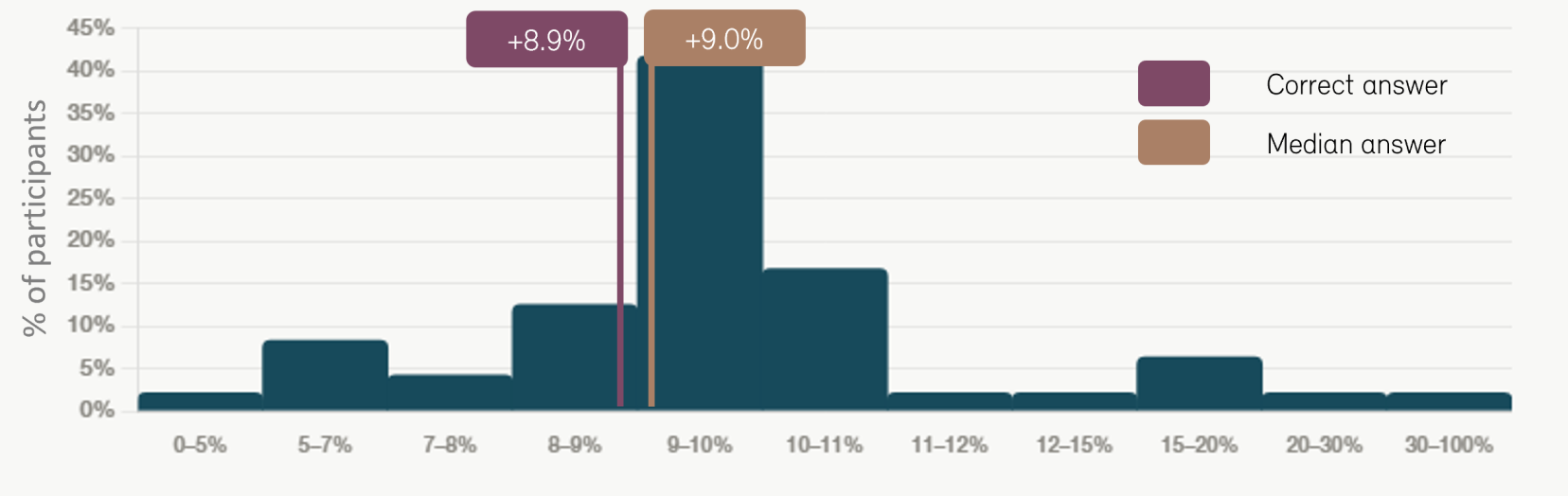
  • What was the annualized return of the SPI Extra? (Period 01.01.2023 – 31.12.2025)

  • What annualized return would a strategy have achieved that invested each year in the 5 worst-performing Swiss stocks? (Period 01.01.2023 – 31.12.2025)

Behind these questions lies the following idea: an active equity strategy has more room to add value when winners and losers within an equity universe are further apart. A strategy that systematically picks the right stocks will achieve a high outperformance. The theoretically best-possible investment strategy, with annual rebalancing and consisting of five equally weighted stocks, would have more than tripled in value each year over the three-year period.

As the chart below shows, quiz participants underestimated the return of such a strategy — and with it, the return potential of an active approach.
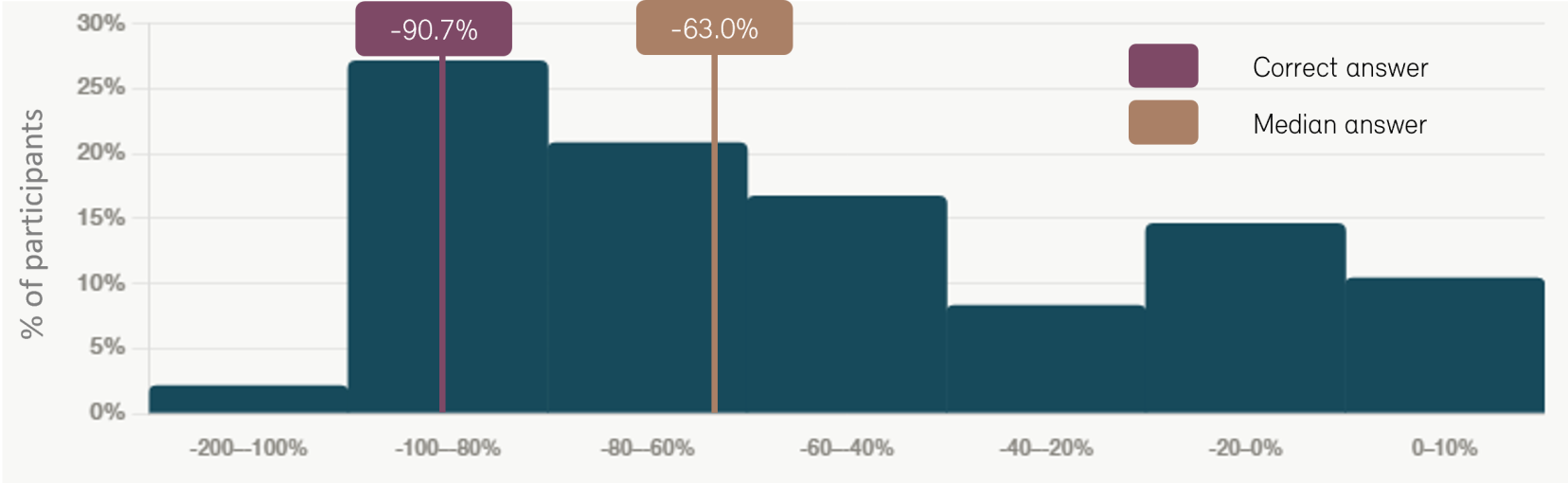
On the other side, participants also underestimated the loss potential. Imagine a strategy plagued by nothing but bad luck: each year over the past three years, it invested in the five worst-performing stocks. The result would have been devastating — an average annual loss of 90.7%, which, compounded over three years, would have wiped out virtually the entire invested capital.

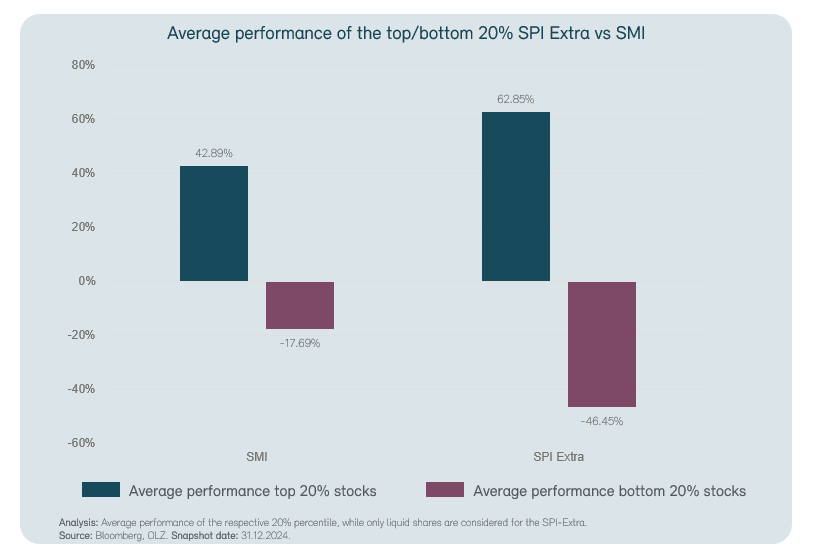
The stocks that performed extremely well or extremely poorly were almost exclusively small and smaller mid caps. The chart below underlines the finding that within the small & mid cap segment of the SPI equity universe, the spread between winning and losing stocks is typically much wider than in the large-cap segment.

In the market-cap-weighted index (SPI and SPI Extra), small and smaller mid caps carry only a small weight. On the one hand, this is favorable, as it limits loss potential — on the other hand, it is unfavorable, as it also limits return potential. Capital market research offers an answer to what can be expected on average. The SMB factor developed by Fama & French has become well established over the years. SMB stands for "Small Minus Big" — in essence, buy small, sell big. According to empirical analyses, this strategy has historically led to excess returns. This also holds true in the Swiss equity universe: the SPI — with a current large-cap exposure of 80% — achieved an annual return of 5.7% over the past 25 years (as of 30.06.2026). The largest Swiss mid caps (SMIM) returned 6.9% per year over the same period, while the broader small & mid index (SPI Extra) returned as much as 7.4% per year. Our OLZ Aktien Schweiz fund has a significantly lower large-cap exposure than the SPI, at under 40%, giving it structurally greater weight in small & mid caps.

Given the higher return potential, an active strategy can particularly unfold its strengths in the Swiss small & mid cap segment. However, since loss potential is also greater, choosing the right investment approach is essential.

Over the past three years, our small & mid cap strategy achieved an attractive annual return of 11.6%. We gave this figure to quiz participants as a hint for our second question. Participants correctly expected our strategy to have outperformed over the period under review, though the extent was slightly underestimated, as they assessed the index return as somewhat higher than it actually was.

The results of our quiz impressively confirm that the spread between winners and losers is substantial — and tends to be underestimated even by industry professionals, in both directions. This is precisely where the opportunity lies for an active, yet systematically implemented, equity strategy. Our OLZ Aktien Schweiz Small & Mid Cap strategy has demonstrated this impressively in terms of returns — while achieving significantly reduced downside risk and lower volatility.

We are always happy to talk to you.

A lasting relationship with our customers is worth more to us than mere success. Get in touch with us, we look forward to hearing from you. Or contact us directly: