Research Panel: From Data to Conviction – Lessons from Research on Active Management
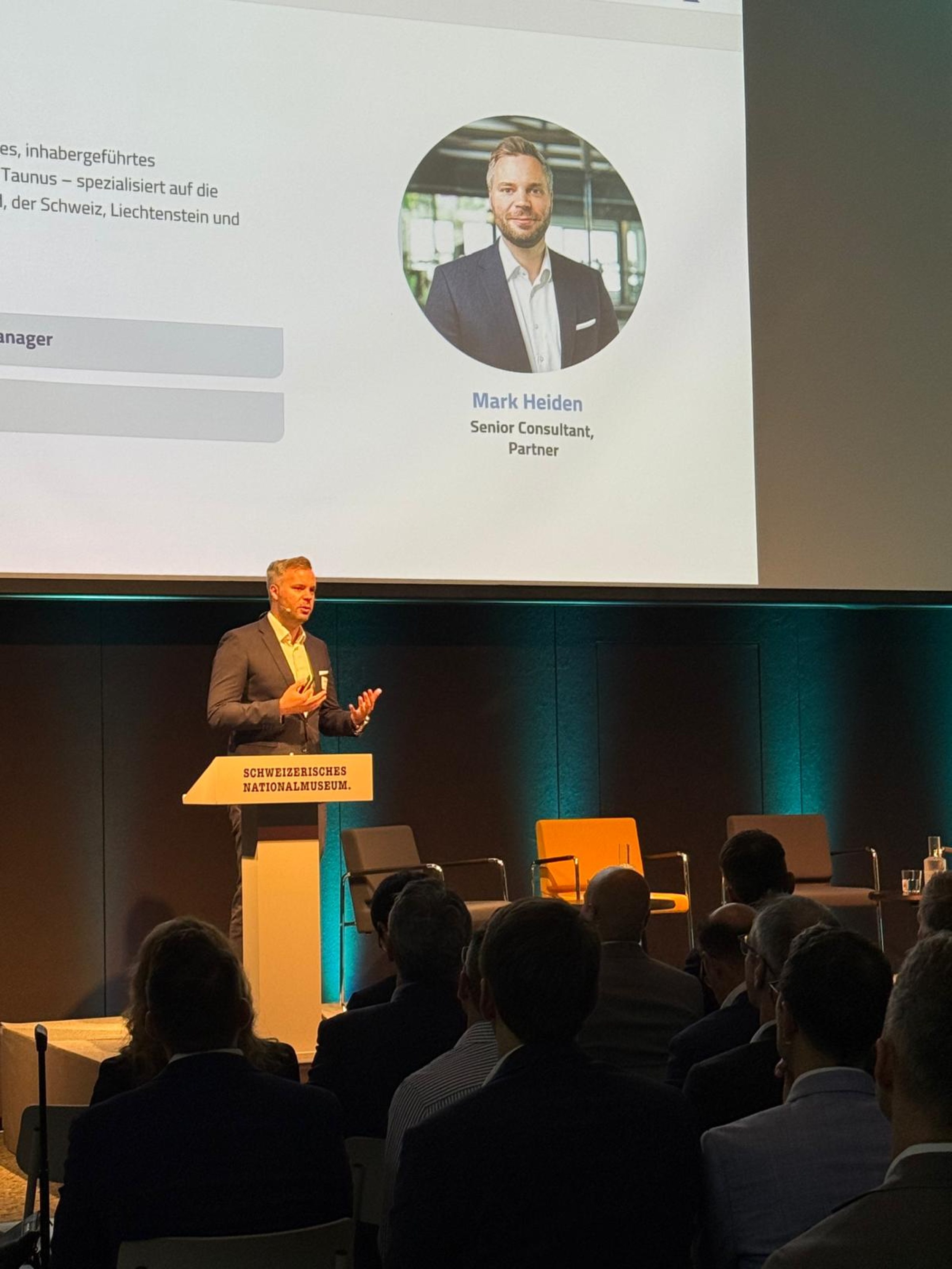
Moderated by Lejda Bargjo (Deputy Head of Quant Client Portfolio Management, Robeco), Mark Heiden, Dr. Patrick Walker (Head of Investment Solutions & Partner, OLZ), and Dr. Mike Chen discussed the path from data to sound investment decisions. A central theme of the discussion was the role of AI in the quantitative investment process. The general consensus: AI is not a cure-all. There is still a need for users who understand the models and their limitations. AI reaches its limits especially when market conditions deviate from historical patterns—after all, it is based on training with historical data and is not prepared for uncharted territory.
Presentation: The Evolution of Quantitative Research in Active Management
Next, Mike Chen, Head of Next Gen Research at Robeco, spoke about the evolution of quantitative research in active management. His key point: AI and complex models are valuable tools for investing—provided you truly understand them. Specifically, this means knowing what data goes into a model, how long that data remains valuable for generating alpha, and whether its use is still worthwhile after accounting for all costs. Chen also emphasized that AI will not completely replace humans. While it pushes the boundaries of what is possible in research, responsibility must still lie with the people who use the models.
Presentation: Quantitative Investing in Swiss Small & Mid Caps
Later that morning, Antonello Cirulli, Head of Product Development & Partner at OLZ, spoke about quantitative investing in Swiss small and mid caps. He pointed out that the Swiss small- and mid-cap universe is characterized by many small, illiquid securities with liquidity that is difficult to predict and, as a result, high transaction costs. When these factors are taken into account, the investable universe shrinks by nearly half in terms of the number of securities—though the reduction is significantly smaller when measured by market capitalization.
Furthermore, it was shown that optimized factor portfolios outperform an equally weighted portfolio. At the same time, optimization reduces both tracking error and trading costs—in some cases yielding performance that even exceeds that of long-short portfolios.
Practical Panel: The Use of Quantitative Approaches in Pension Funds
In the concluding panel discussion, Mathias Herger (Deputy Managing Director, Uri Pension Fund) and Christine Schmid (Head of Investments, Servisa Collective Foundation), moderated by Pius Zgraggen (CEO & Partner, OLZ), discussed the use of quantitative approaches at a pension fund to manage the coverage ratio and optimize risks. A key point of the discussion: It depends significantly on how the individual asset classes are actually invested. A simple allocation at the asset class level does not go far enough—it is also crucial which strategy is used within an asset class, such as a minimum-variance approach for equities compared to riskier strategies with higher volatility.
During the networking lunch that followed, participants were able to delve deeper into further points and suggestions arising from the discussions.
Our takeaway from the event
The symposium highlighted several key themes: Quantitative investing does not, in and of itself, deliver better returns than fundamental approaches, but it does provide more reliable and predictable results. In the Swiss small- and mid-cap universe, this is evident, for example, in the fact that optimized factor portfolios outperform an equally weighted portfolio while exhibiting lower tracking error and lower trading costs. As powerful as AI-driven models are today, their limitations become apparent precisely where they matter most—in market phases that deviate from the past. Those who use them must understand what data is incorporated and how long it remains relevant. AI pushes the boundaries of research, but responsibility remains with humans.
From the perspective of institutional investors as well, it has become clear that one-size-fits-all solutions fall short. Whether it’s choosing an investment strategy within an asset class or managing a pension fund’s funding ratio—it all comes down to the specific implementation. People with an understanding of the model, the portfolio, and the market environment therefore remain indispensable.
We thank all the speakers as well as our partner Robeco for the stimulating discussion and look forward to the next symposium.